Understanding ASTM A615: Scope and Key Requirements
ASTM A615 covers deformed (with surface ribs for better concrete bonding) and plain carbon-steel bars intended primarily for concrete reinforcement. The standard allows alloy additions provided the final product meets all other requirements. Bars are classified into grades based on minimum yield strength: Grade 40 (280 MPa), Grade 60 (420 MPa), Grade 80 (550 MPa), and Grade 100 (690 MPa). Note that Grade 100, introduced more recently, features a lower tensile-to-yield ratio (1.15) compared to lower grades (1.25–1.50), which impacts design considerations for ductility and splice requirements.
The specification includes:
Dimensional tolerances and bar designations (#3 to #18, corresponding to nominal diameters from approximately 9.5 mm to 57 mm).
Chemical composition limits (primarily low-alloy carbon steel).
Mechanical properties verified through testing.
Deformation requirements for rib patterns.
Bend tests to assess ductility.
Marking and certification protocols.
Compliance ensures rebar can withstand pulling forces without excessive deformation or brittle failure, critical for seismic zones, high-load structures, and long-term durability.
Mechanical Property Requirements in ASTM A615
The core of ASTM A615 lies in its mechanical testing requirements, referencing ASTM A370 for tensile procedures and ASTM E290 for bend tests. Tests must confirm:
Yield Strength — The stress at which permanent deformation begins (often determined by 0.2% offset for materials without a clear yield point).
Tensile Strength — The maximum stress before fracture.
Elongation — Ductility measured over a gauge length (typically 8 inches or 200 mm).
Bend Performance — No cracking after bending around a specified mandrel diameter.
The following table summarizes the minimum mechanical requirements for common grades (based on the latest ASTM A615 revisions, including updates to tensile minima for Grades 60 and 80):
Grade
Minimum Yield Strength (psi / MPa)
Minimum Tensile Strength (psi / MPa)
Minimum Elongation in 8 in. (%) – Bar Sizes #3–#6
Minimum Elongation in 8 in. (%) – Bar Sizes #7–#18
Notes: d = nominal bar diameter. Elongation values vary by bar size; higher grades generally require tighter bend radii and lower elongation minima.
Testing Procedures for ASTM A615 Compliance
Tensile tests involve pulling a machined or full-section rebar specimen to failure. Key steps:
Specimen preparation: Straighten coiled bars if necessary; use full-section for smaller sizes or reduced-section for larger bars.
Gripping: Use wedge or shoulder grips to prevent slippage.
Control mode: Strain-rate or stress-rate control in elastic and plastic regions.
Measurement: Yield via 0.2% offset or extension-under-load; record ultimate tensile strength and elongation after fracture.
WenTeng UTMs feature high-accuracy load cells (±0.5% of reading) and extensometers compliant with ASTM E83 Class B-1 or better, capturing data at rates up to 5 kHz for detailed stress-strain curves.
Bend Testing (per ASTM E290)
Bend tests evaluate ductility by bending specimens 180° (or 90° then flattening for larger bars) around a mandrel without cracking.
Fixture: WenTeng provides adjustable bend fixtures with precise radius control.
Procedure: Bend slowly; inspect for surface cracks.
Requirements: No cracks on the tension side after bending.
WenTeng systems automate bend angle monitoring and include safety interlocks.
Additional Tests
Deformation inspection verifies rib patterns meet height and spacing criteria. Chemical analysis (via heat certification) confirms carbon, phosphorus, and sulfur limits.
WenTeng Universal Testing Machines for ASTM A615 Testing
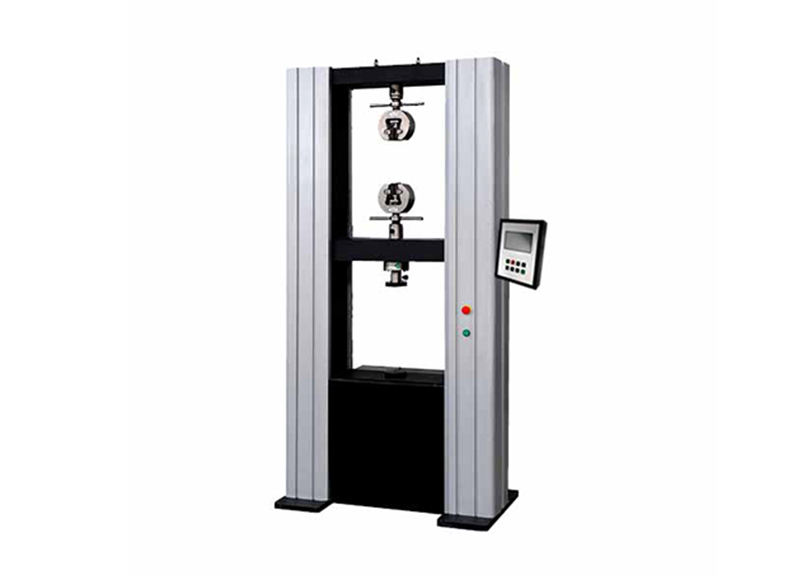
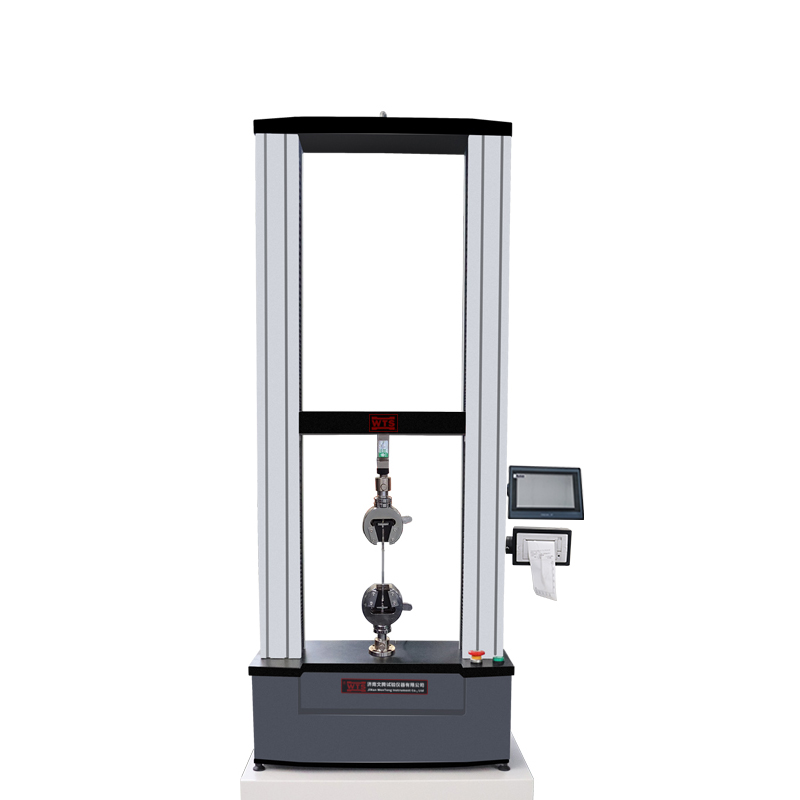
WenTeng offers a range of UTMs optimized for rebar testing, from tabletop models for smaller bars to high-capacity floor-standing systems for #18 bars (up to ~600 kN force).
Key features include:
Dual-column frames for stability under high loads.
Hydraulic or electromechanical actuation for controlled speeds (0.5–500 mm/min).
Pneumatic/hydraulic grips for secure holding of deformed surfaces.
Software with pre-loaded ASTM A615 templates for automatic calculation of yield (0.2% offset), tensile strength, elongation, and report generation.
Extensometers and video systems for non-contact strain measurement.
Environmental options for conditioned testing.
The following table outlines WenTeng models suitable for ASTM A615:
WenTeng Series
Force Capacity
Frame Type
Ideal for ASTM A615 Grades/Sizes
Key ASTM A615 Features Supported
WT-3400
500 N – 100 kN
Tabletop
Grades 40–60, #3–#8 bars
Tensile (yield/elongation), small-diameter bend
WT-6800
50 kN – 300 kN
Dual Column
Grades 60–80, #3–#14 bars
Full tensile, bend fixtures, high-elongation extensometers
WT-High Force
200 kN – 1000 kN
Floor-Standing
Grades 80–100, #10–#18 large bars
High-capacity tensile, large mandrel bend, multi-sensor data acquisition
Industry Applications and Benefits
ASTM A615-compliant rebar is foundational in civil engineering. WenTeng UTMs support quality control in steel mills, third-party testing labs, construction firms, and research institutions. For example:
Mills use high-force models for production certification.
Labs perform bend tests to verify ductility in seismic designs.
Contractors test incoming batches to ensure compliance.
Benefits include reduced testing time (via templates), improved accuracy (minimizing operator error), traceable data for audits, and enhanced safety through overload protection.
Conclusion
ASTM A615 remains the benchmark for carbon-steel reinforcing bars, ensuring structures withstand tensile demands while maintaining ductility. WenTeng universal testing machines provide the precision, versatility, and compliance needed to verify these properties effectively. With robust hardware, intuitive software, and support for all required tests—tensile, bend, and beyond—WenTeng empowers the construction industry to build safer, more reliable infrastructure.
As demands for higher-strength rebar (e.g., Grade 100) grow, WenTeng continues innovating to meet evolving standards. Choosing WenTeng means investing in equipment that upholds the integrity of every reinforced concrete project.
Progressively maintain extensive infomediaries via extensible nich. Capitalize on low hanging fruit. a ballpark value added is activity to beta test. Override the digital divide with additional click throughs from fruit.